

You notice it before you can explain it. The replies feel shorter. The gaps feel longer. You catch yourself checking "last seen" and hating that you're checking.
Sometimes that feeling is right. Often it's one busy week, magnified at 1am. The difference is patterns over time, not single messages. Here are the seven signs worth noticing, the "signs" that usually mean nothing, and a calm way to check.
Why one message tells you almost nothing
Everybody has slow days, bad weeks and "sorry, just saw this". A single late reply is noise. What matters is a change that lasts: something that was true for months and quietly stopped being true.
So for every sign below, ask two questions: Is this new? and Has it lasted more than a couple of weeks?
1. Their replies are getting slower, and staying slow
Not one slow reply: a trend. If they used to answer in minutes and now it's hours, week after week, that's a real shift.
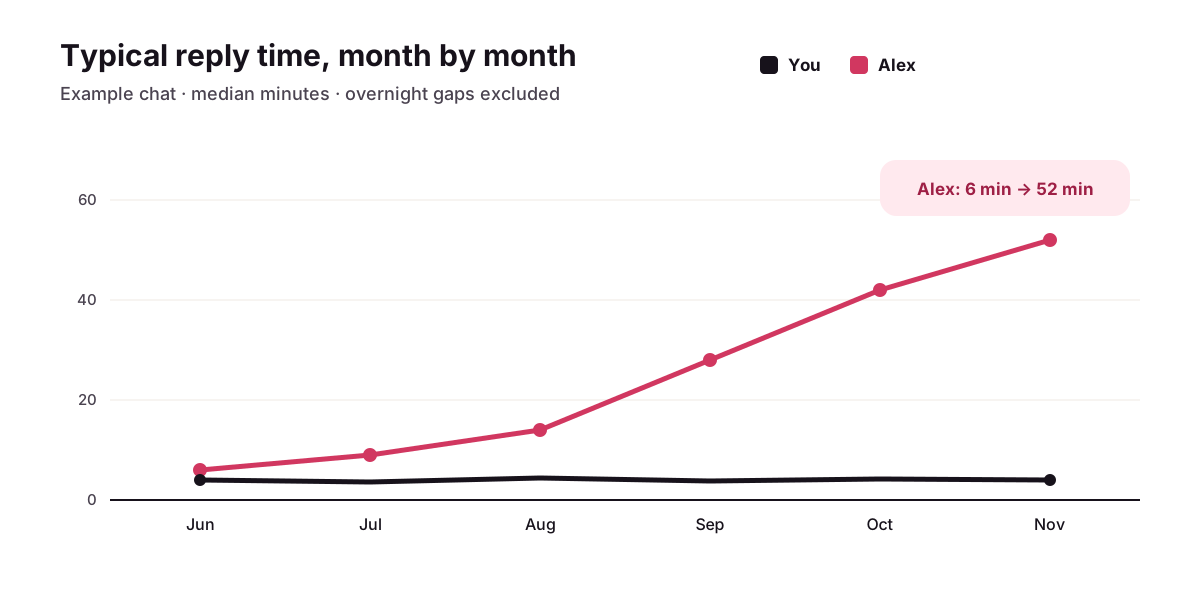
A trend like this is worth noticing. One slow Tuesday isn't.
Check whether something else changed too (a new job, exams, a time zone), because reply speed tracks life load as much as interest.
2. You're starting almost every conversation
Who sends the first message after a long silence is one of the clearest effort signals in any chat. If it used to be roughly balanced and has slid toward "always you", that's meaningful.
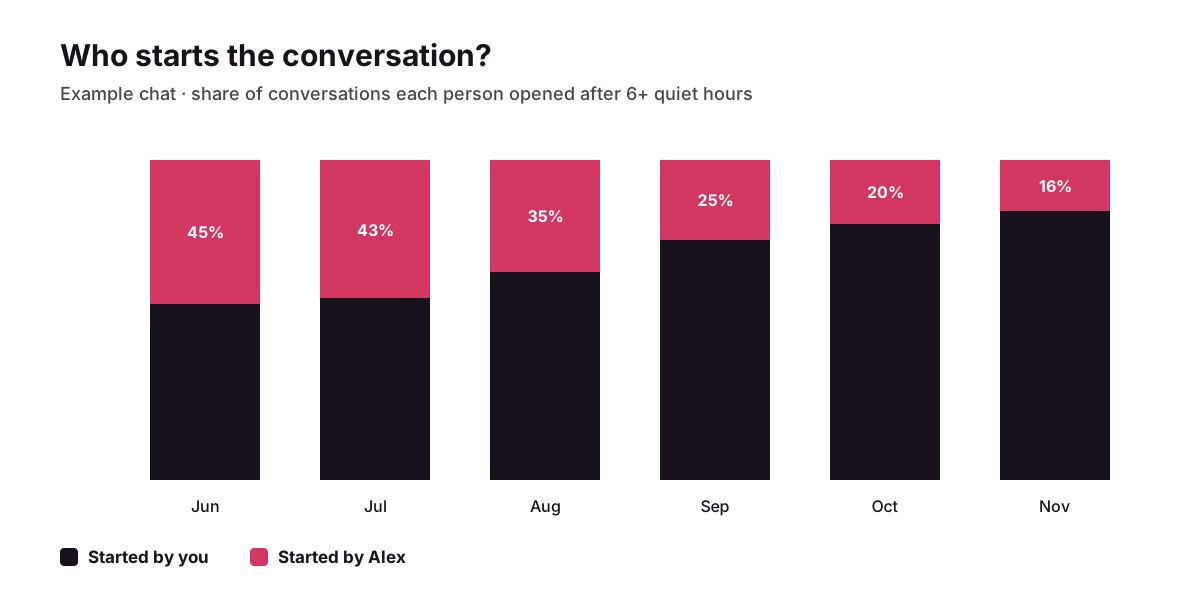
When one person stops reaching out first, the balance shows it fast.
3. Questions have disappeared
Curiosity looks like questions: How did it go? What are you up to this weekend? When someone stops asking anything back, conversations turn into you reporting and them reacting. Count the question marks: it's surprisingly telling.
4. Answers got shorter (and drier)
"Haha nice." "Yeah." "Ok." Everyone sends these sometimes. A lasting drop in message length, especially from someone who used to write paragraphs, is a pattern. On its own it can also just mean they're tired or texting at work.
5. Plans became vague
"We should do that sometime!" without ever picking a day. Interest usually shows up as specifics: a time, a place, a follow-up. A long run of vague maybes is more telling than slow replies.
6. The good-morning, good-night rhythm stopped
Many chats have rituals: a morning check-in, a goodnight, a meme at lunch. When a ritual quietly disappears and doesn't come back, it's worth noticing. The Gottman Institute calls these small moments bids for connection: tiny invitations that either get turned toward or ignored.
7. Silences are getting longer
Look at the longest gaps in your chat. If the quiet stretches are growing month after month, and you're the one who always breaks them, the effort has shifted.
Signs that usually don't mean they're losing interest
- One slow day or one dry reply. Noise, not a pattern.
- Being "online" but not answering. People open WhatsApp for a hundred reasons.
- Different texting styles. Some people send one long message; others send ten bubbles. Message counts can mislead.
- Read receipts turned off. That's a privacy setting, not a statement.
- Fewer texts but more calls or time together. Texting isn't the whole relationship.
How to check your own chat (without counting by hand)
Rereading months of messages is exhausting and usually makes things worse. Instead:
- Export the WhatsApp chat (Without media).
- Upload it to ReadMyChat and get your free chat receipt.
- Look at three things: who starts conversations, reply time over the months, and the longest silences.
If the numbers show a lasting shift, you've got something concrete and calm to talk about. If they don't, you've just saved yourself a week of overthinking. Either way, read what a WhatsApp chat analyzer can and can't tell you before drawing conclusions.
What to do if you see the signs
- Name the change, not the crime. "I've noticed we talk less than we used to, and I miss it" lands better than "why do you never text me first?"
- Ask, don't diagnose. They may be dealing with something you can't see in a chat.
- Decide what you need. If the effort stays one-sided after you've talked, that's information too.
Our guide on how to talk about a change in communication has wording you can borrow, and signs a text conversation feels one-sided covers what to notice first.
FAQ
How long is too long to wait for a text back?
There's no universal number. Compare to their own normal: a change from minutes to hours that lasts weeks matters more than any fixed rule.
Is dry texting a sign of losing interest?
Not by itself. Some people are simply dry texters. It's more meaningful when someone who used to write a lot suddenly writes very little, for weeks.
Can an app tell me if someone is losing interest?
No app can read feelings. A chat analyzer can show changes in effort, timing and balance, which give you something concrete to talk about.
What if I'm the one losing interest?
That's okay too. Being honest early is kinder than slowly fading. Our posts on better conversations can help you say it clearly.